
Textile-form Weaving
The woven textile-form is the central research project of Holly's practice at TU Delft — an evolving, collaborative body of work asking what becomes possible when a garment and the textile it is made from are designed as a single integrated object, conceived and fabricated together on the loom.
The process begins with existing garments placed on a lightbox to reveal internal layers, and paper models that translate complex three-dimensional form into a flattened, foldable interpretation. This flat-form is then abstracted into a Map of Bindings — a two-dimensional artwork that encodes the garment's form potential through variable weave structures and densities across the loom width. Tools like CLO3D, conventionally used in fashion design, become textile design tools through the interchange of three-dimensional form and two-dimensional pattern.
The result is a woven trouser — or jacket, or other textile-form — that emerges from the loom requiring minimal finishing, generates no fabric waste, and can be adapted for a range of body sizes and shapes without changing the fundamental design. The process enfolds zero waste thinking into the fabric of production itself rather than treating it as a separate design consideration.
This work has been developed collaboratively with Milou Voorwinden (PhD student), Alice Buso (PhD), and a series of MSc graduation projects including Diamond Denim collaborations, a provisional patent for a 3D knitting method (with Sem Janssen and Elisa Soerjo), and research into on-loom shaping tools that open up the weaving process itself as a design space.
Ongoing since 2017. Key collaborators: Milou Voorwinden, Kathryn Walters and MSc students. Published across CHI, DIS, DRS, and the Journal of Textile Design Research and Practice.
Textile-form
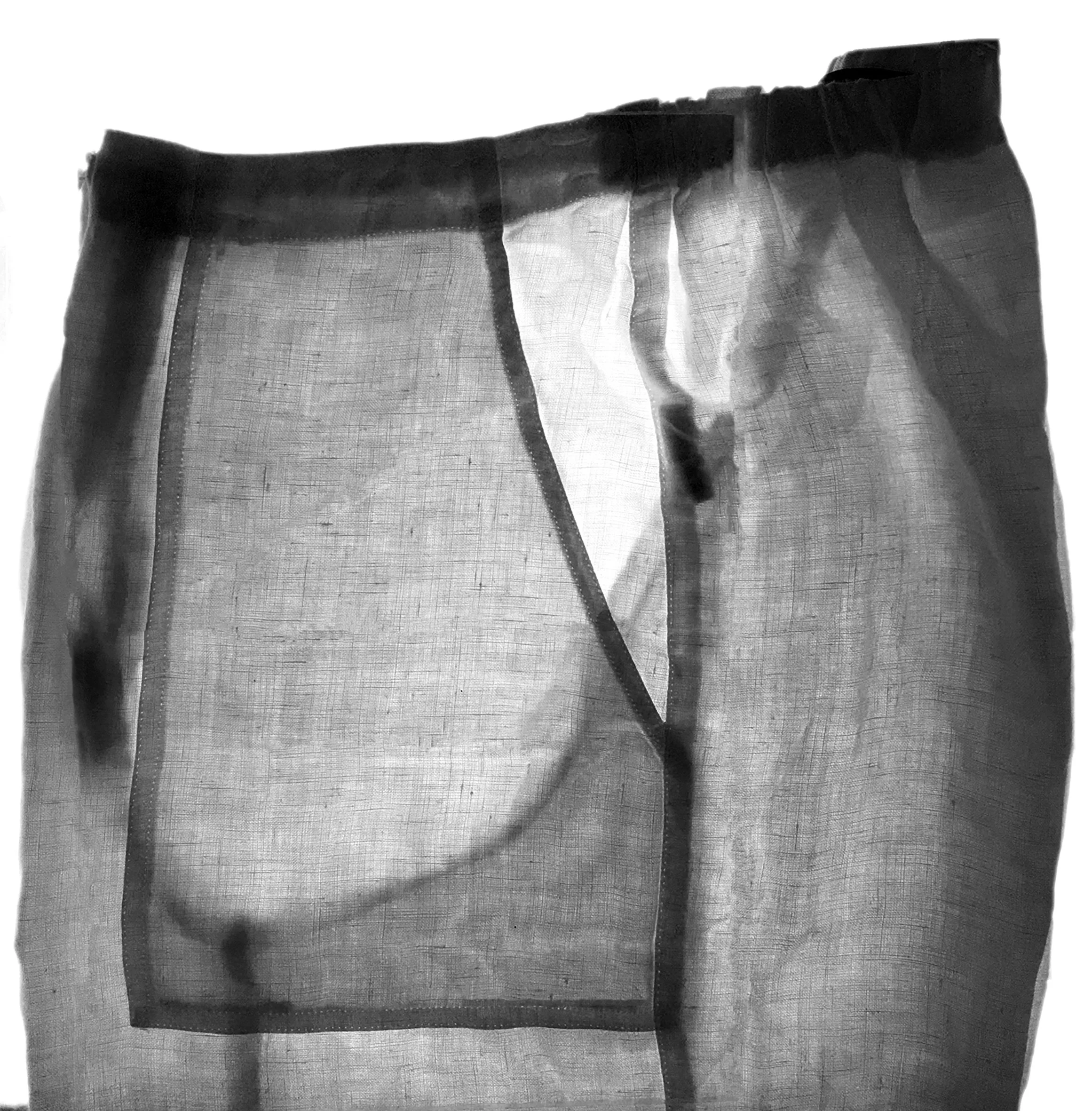
A light-box reveals the layers that make the folded form of a conventionally made trouser that can be translated into woven layers
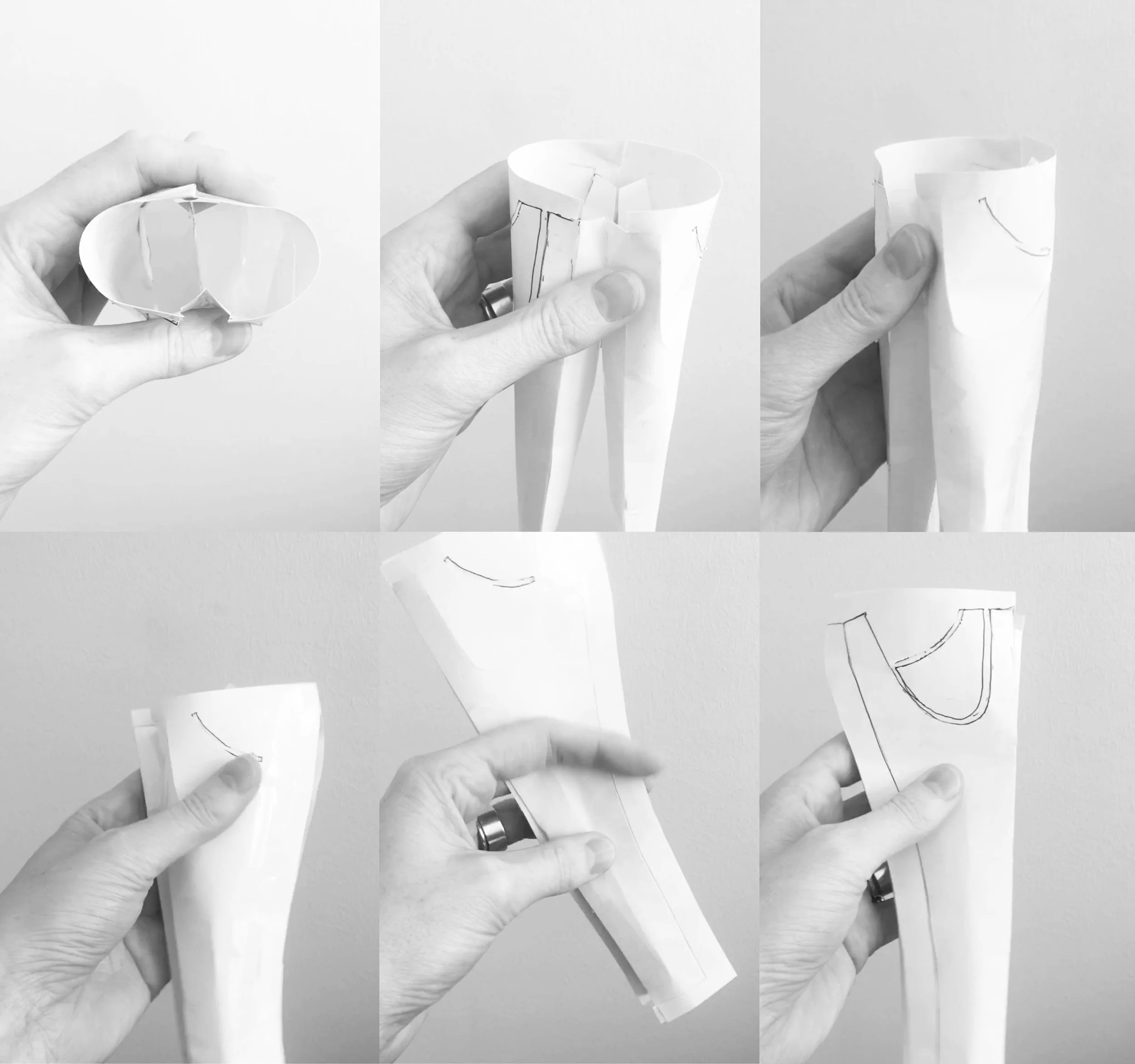
The folded layers can then be translated into paper model with layers that separate and join, moving from flattened (and weave-able) to unfolded and 3D.
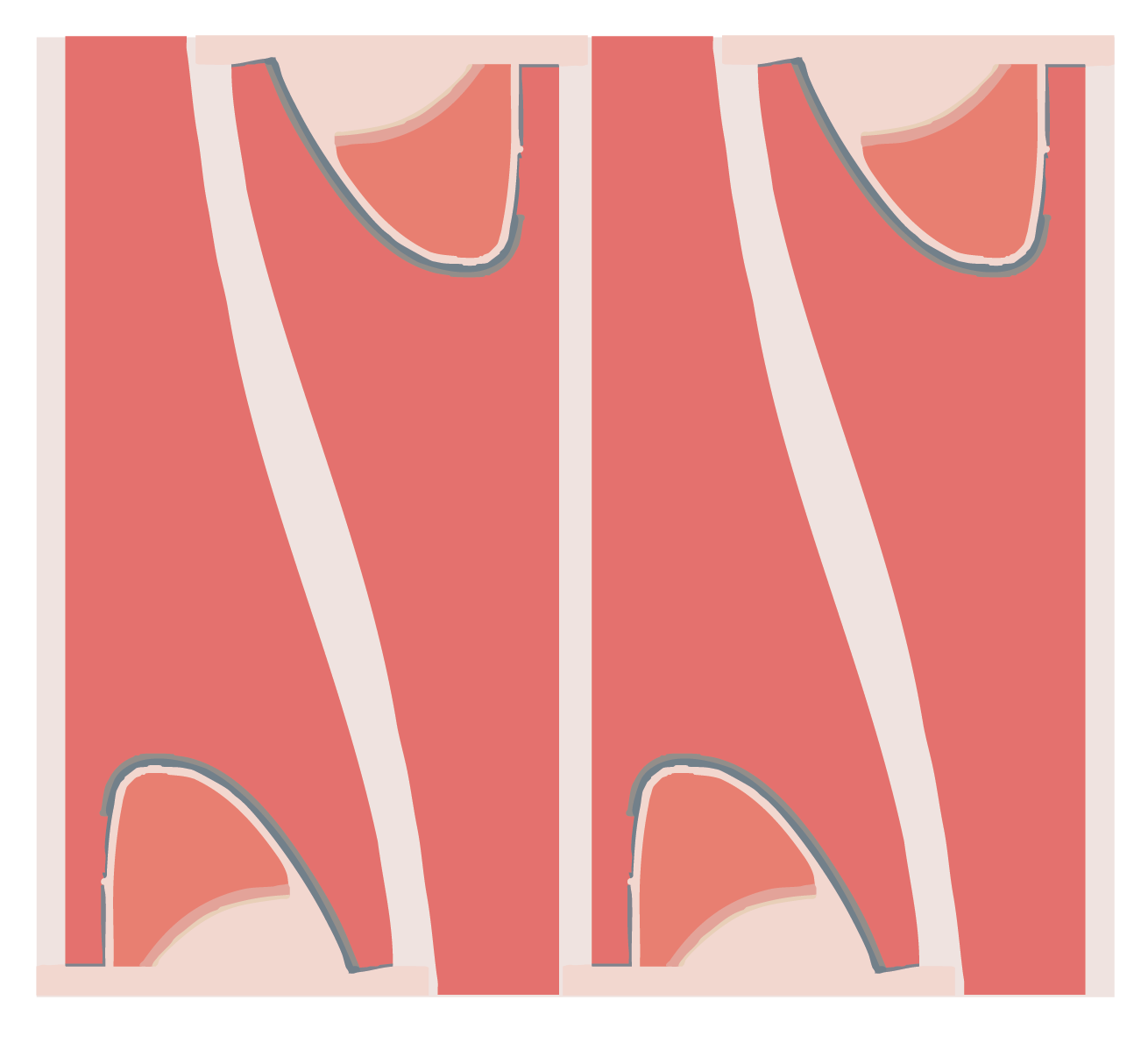
The flattened layered trouser concept is translated into a 2D artwork or "Map of Bindings".
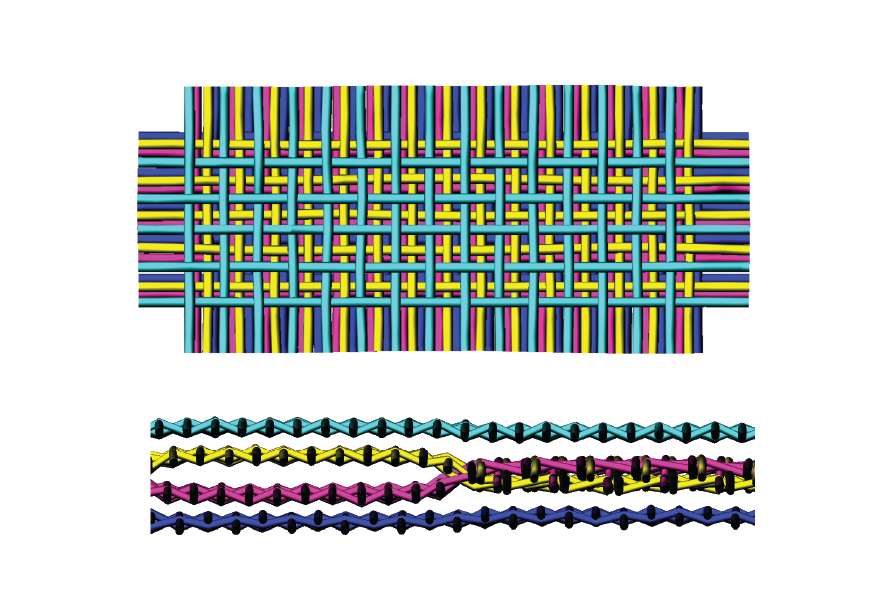
Each technical colour in the MoB is programmed with a corresponding weave structure determined by the layer arrangements required.
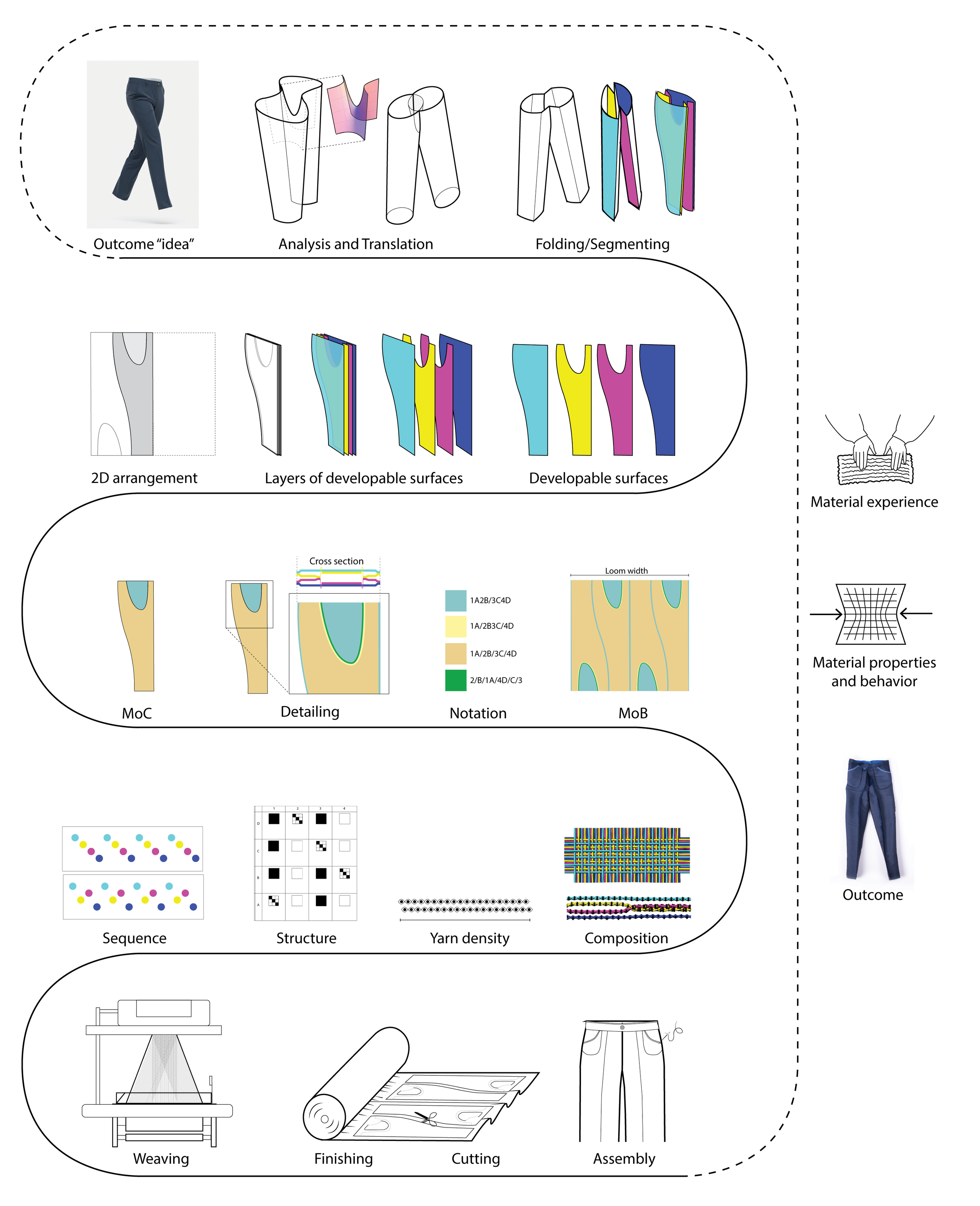
The full Textile-form Weaving method.
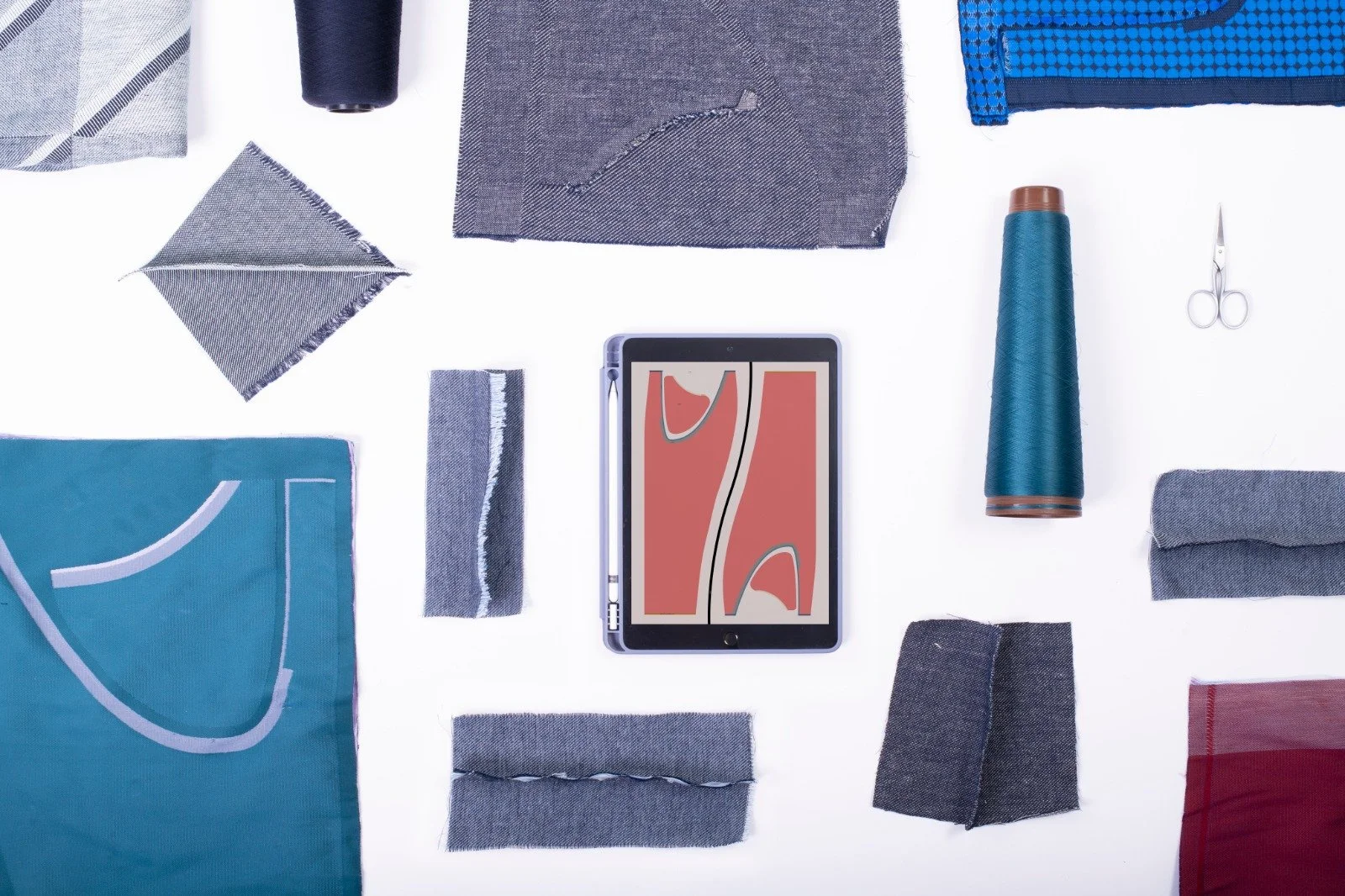
The design development process requires designers bring together multiple scales and levels of knowledge along side material prototyping and digital design.
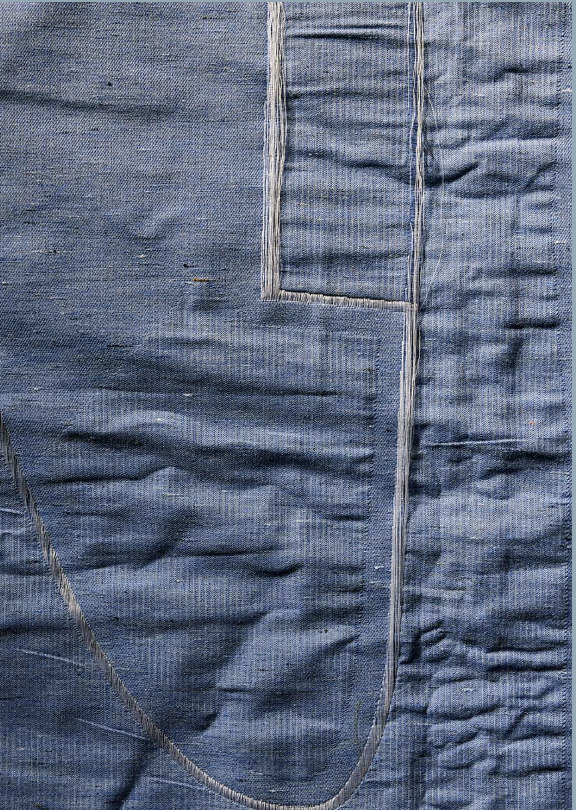
The woven cloth appears 2D but has layers and three-dimensionality embedded within it. The floats are cut to release the form that can fold out like a concertina or pop-up book.
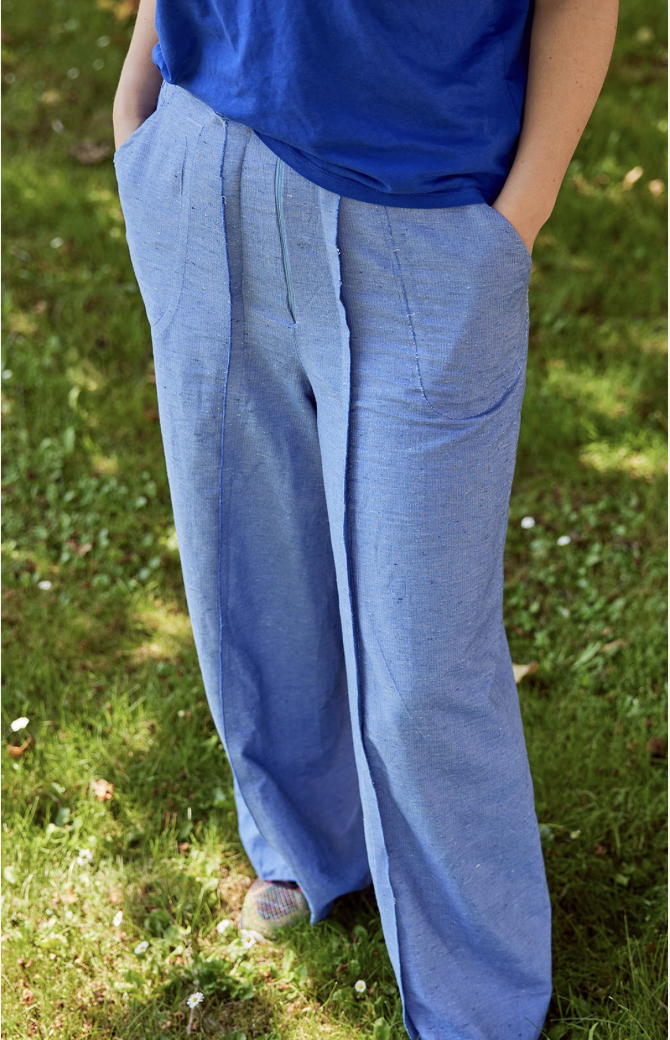
This final woven trouser only requires a zipper to be inserted, the waistband, hems and pocket openings to be turned over and sewn.
Voorwinden, M. & McQuillan, H. (2025). Woven Textile-form Design: A method to design Woven 3D Form.
McQuillan, H., Voorwinden, M., Arts, B., & Vroom, B. (2023). The Circular Techno-Aesthetics of Woven Textile-forms: A Material and Process-driven Design Exploration.
McQuillan, H. (2019) ‘Hybrid zero waste design practices: Zero waste pattern cutting for composite garment weaving and its implications’.