
Design Space for Textile-form Weaving
Textile-form
Weaving holds far more design potential than current industrial practice suggests. Most automated looms were developed for mass-producing flat, simple fabrics — and this has quietly narrowed what designers, engineers, and researchers imagine weaving can do. Three-dimensional textile-forms, animated and shape-changing structures, smart and living materials, zero waste and on-demand manufacturing: these possibilities exist, but there has been no shared language or framework for exploring them systematically.
This research developed a comprehensive design space for woven textile-forms, mapping the variables available to designers across four dimensions: Material Process (the motions of the loom), Material Ingredients (yarns and materials), Material Structure (how materials are arranged and interlaced), and Material Form (how three-dimensional form is translated into a weavable structure). The design space is not a decision tree or an exhaustive list — it is a living resource that evolves as new technologies, materials, and methods emerge.
Animated Shuttle-woven Textile-forms
The design space was developed in part through a design case: animated three-dimensional woven trousers produced using shuttle weaving on a TC2 loom. Shuttle weaving — in which a continuous weft thread is carried back and forth across the loom, including in partial-width insertions — offers unique possibilities that shuttleless industrial weaving cannot: localised material placement, seamless folds between layers, self-finished selvedges in the middle of a fabric, and the ability to embed animated or shape-changing materials precisely where they are needed.
The resulting trouser prototype combines heat-shrinking yarns placed in specific zones to allow the wearer to shrink the waistband and trouser legs to fit, with a removable clasping thread that can be pulled out to change the fit or silhouette entirely. The textile-form comes off the loom requiring minimal finishing — no cutting, almost no sewing — and generates no fabric waste.
A Toolkit for Exploring the Design Space
The design space also forms the foundation for a physical toolkit developed with academic and industry-based designers through workshops and focus group discussions. The toolkit brings together a card deck and canvas that externalise and interrogate existing assumptions about weaving, and a modified frame loom that enables hands-on exploration of new possibilities. It offers both analytical and making-based routes into unconventional textile design — combining critical reflection on production systems with direct material experimentation, and providing a shared vocabulary across disciplines.
Developed through Milou Voorwinden’s ongoing PhD, with Alice Buso, Savanne Klop, and Elvin Karana.
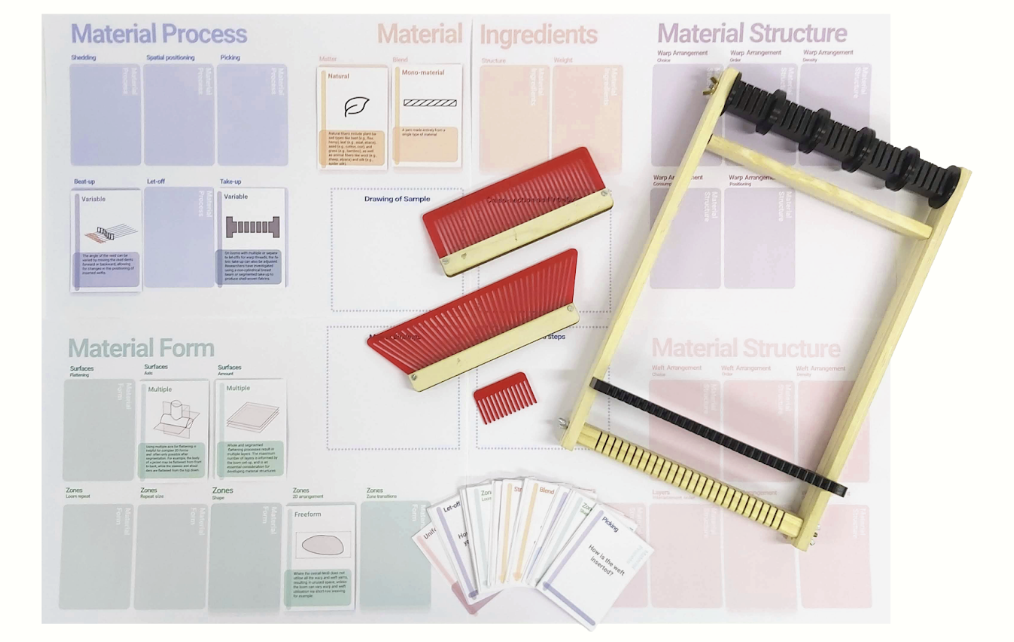
Design Space and Toolkit
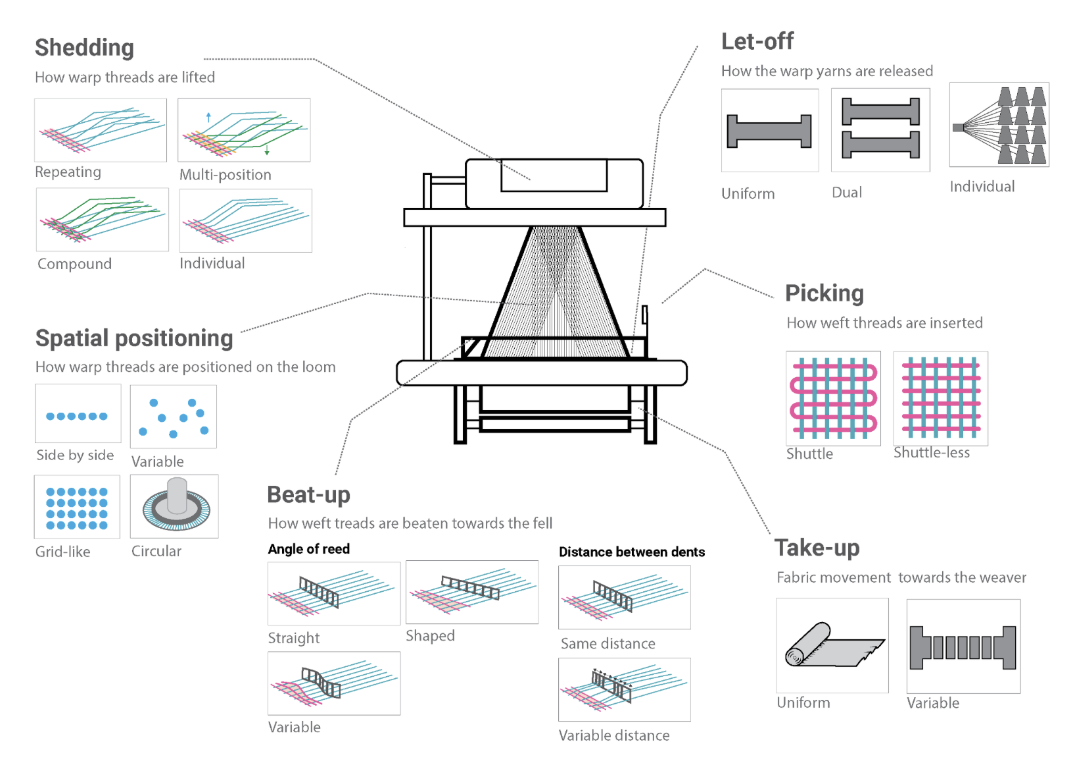
Material Process
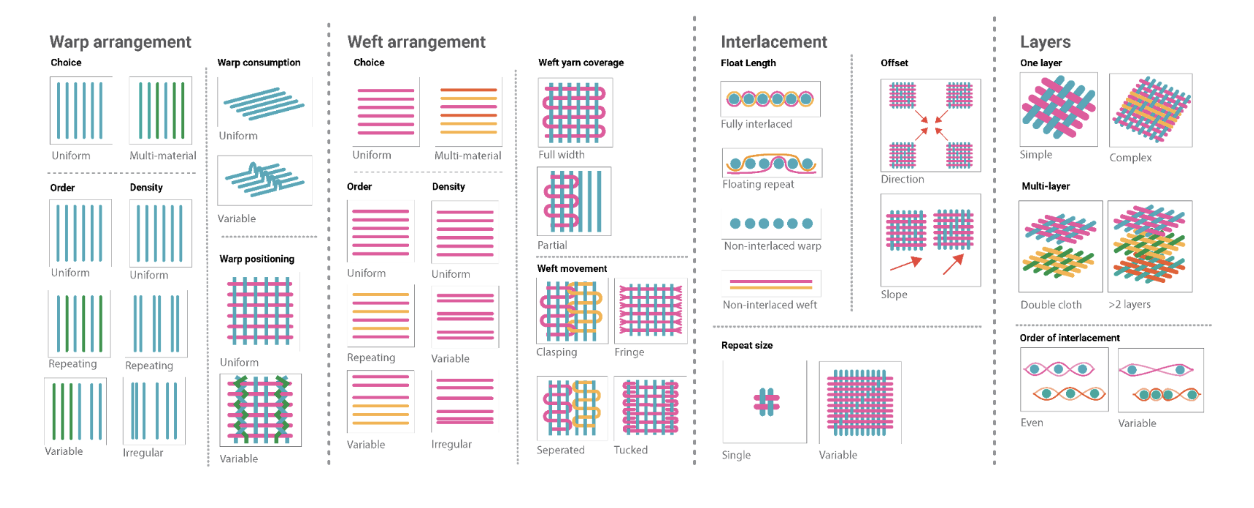
Material Structure
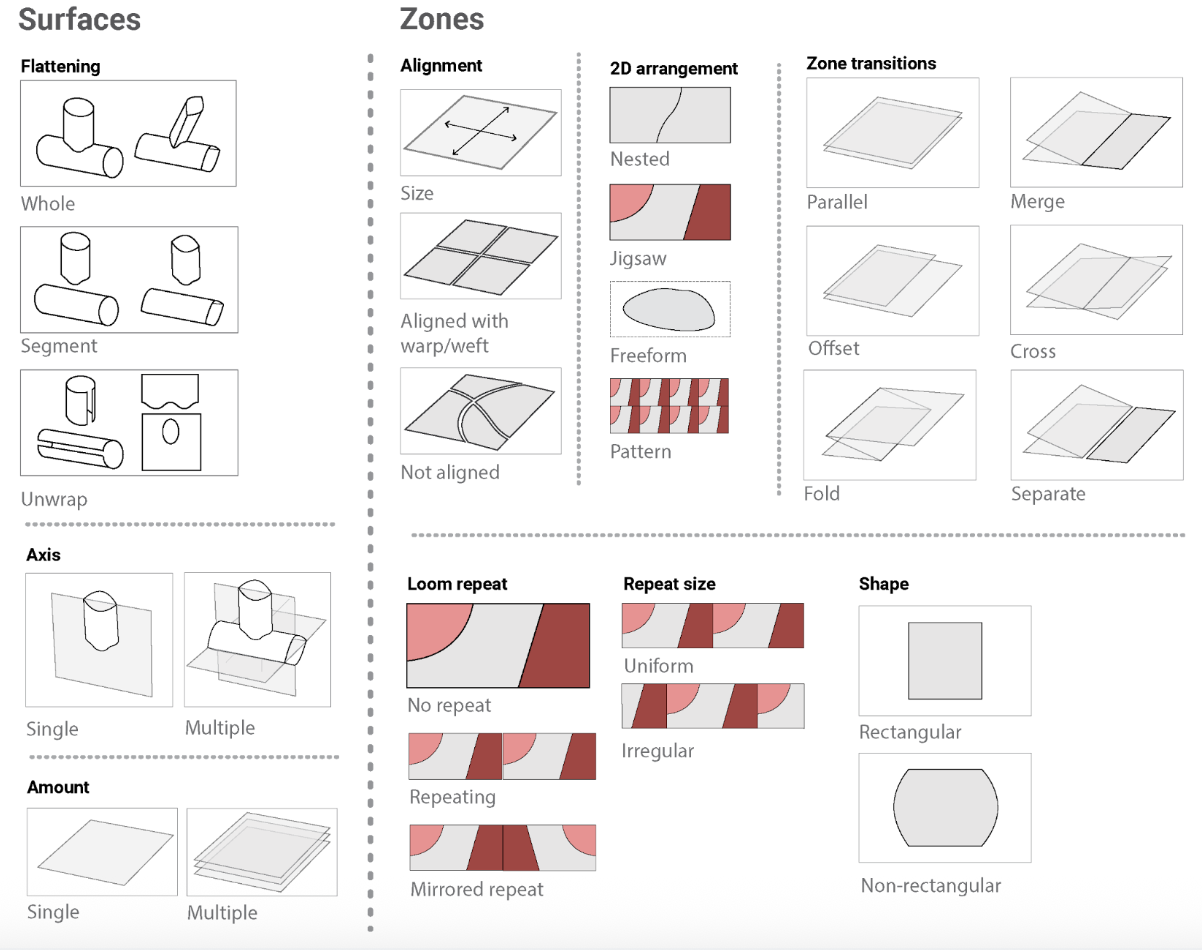
Material Form
Voorwinden, M. Buso, A., Karana, E. & McQuillan, H. (2025). A Design Space for Animated Textile-Forms through Shuttle Weaving: A Case of 3D Woven Trousers.
Voorwinden, M., Klop, S., & McQuillan, H. (2026). Designing a toolkit to explore the Design Space of Woven Textiles.